
The Great Ward of the Museum: Medieval Healing in Stone
Table of Contents
Introduction: Where Pain Met Prayer
The Great Ward of the Museum is not just a room—it is a preserved act of care in stone, a space where compassion was once built into the very architecture. Located on the upper floor of the former hospital of the Knights of Saint John, this long, vaulted chamber welcomed the sick, the wounded, and the weary of the medieval city.
Under its sweeping Gothic arches, patients lay in orderly rows, tended by knights who combined chivalric duty with healing service. The quiet rhythm of the architecture—its ribbed ceilings, thick walls, and narrow windows—still seems to echo the pulse of a place shaped by resilience and mercy.
Within this solemn expanse of stone and light, medieval Rhodes reveals its healing soul, reminding us that even in times of conflict and fear, care was a sacred act.
The Heart of the Hospital
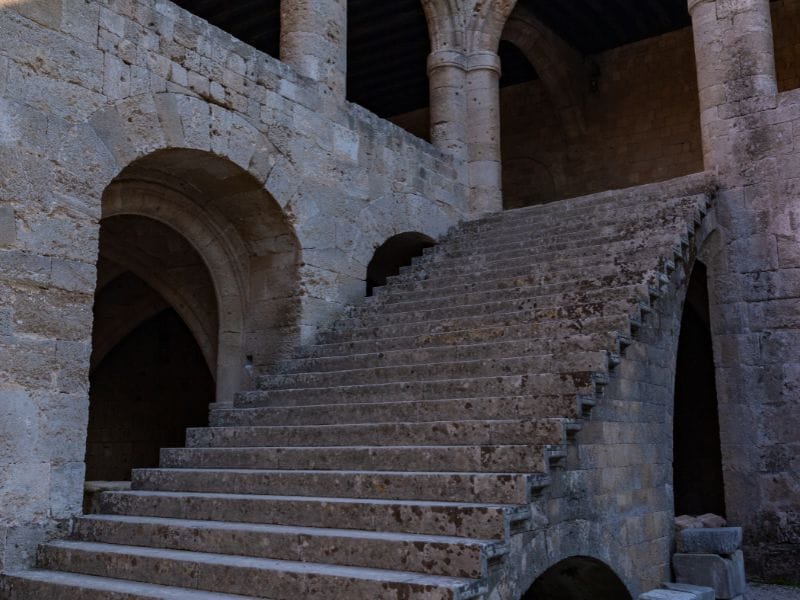
Constructed in the late 15th century, the Great Ward was the main treatment hall of the Order’s hospital. This was not an era of sterile clinics and advanced instruments, but of faith-driven healing, where medicine and religion worked hand in hand. Knights, pilgrims, and locals alike were received in this large hall, laid on wooden beds in orderly rows beneath a ceiling that inspired both reverence and calm.
The space was built as part of the Hospital’s upper story, overlooking the bustling courtyard below. While daily activity carried on at ground level—cooking, cleaning, prayers, logistics—the Great Ward of the Museum above became a zone of focused stillness.
Architecture of Healing
The architecture itself served the healing process. A series of pointed Gothic arches, resting on robust cross-vaults, stretch across the ceiling, drawing the eye upward. These features weren’t just aesthetic. They allowed light and air to circulate while also conveying spiritual aspiration. In medieval thinking, the soul’s elevation mattered as much as the body’s comfort.
The scale and proportions of the room created an atmosphere of order and peace—qualities essential for the recovery of the ill. Windows opened onto the courtyard below, letting in fresh air and the soft rhythms of daily life, reminding patients of the world waiting beyond their recovery.
Daily Life and Medical Practice

In the time of the Knights, care inside the Great Ward of the Museum was provided by monastic brothers trained in basic surgery, herbal medicine, and religious devotion. The image is vivid: a monk with a basin and bandage, the soft flicker of oil lamps casting long shadows, whispered prayers blending with the groans of pain and chants in Latin.
Treatment was a combination of poultices, infusions, and scripture. Illness was seen as a test of faith as much as a physical ailment. The Knights considered healing a form of divine duty, and this room was their sacred theater of compassion and endurance.
Funerary Slabs and Memory in Stone
Today, the floor of the Great Ward of the Museum is lined with marble funerary slabs. These grave markers, brought from various ruined churches across Rhodes, commemorate fallen members of the Order and local nobility. Their coats of arms—crosses, lions, fleurs-de-lis—still speak of valor and identity.
This transformation of the Great Ward of the Museum from place of healing to place of remembrance reinforces its symbolic power. Where once breath and prayer mingled, now memory and silence prevail.
The Great Ward of the Museum Today
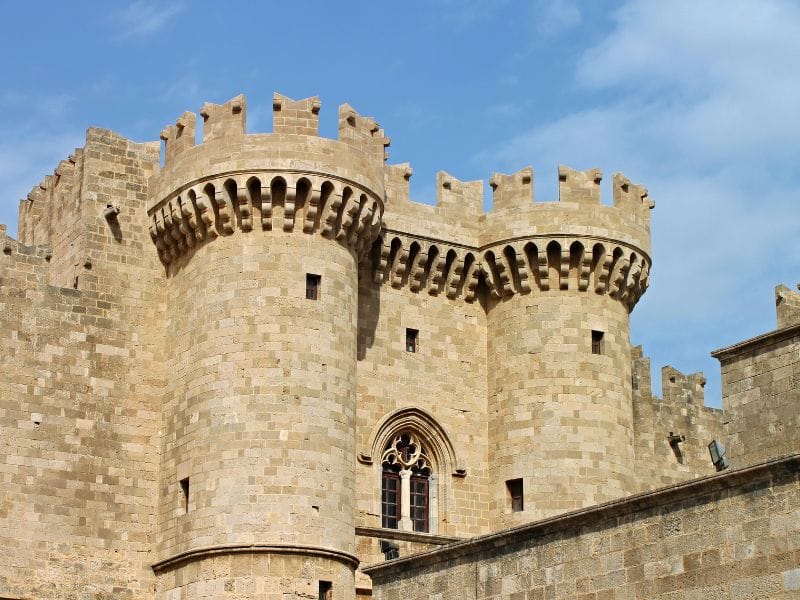
Now a central highlight of the Archaeological Museum of Rhodes, the ward remains one of its most atmospheric spaces. The vaulted ceiling, heraldic slabs, and filtered light turn the room into a memorial gallery that preserves not only architecture but also the values it once embodied.
Visitors are encouraged to walk slowly, to observe, and to feel. The room asks for attention, not noise. It is as if the very stone remembers what it once witnessed.
Stone That Healed
The Great Ward of the Museum stands as a testament to Rhodes’ medieval soul—where faith, medicine, and architecture merged into acts of mercy.
In this great hall, the Knights built more than a hospital. They created a space that dignified suffering and honored care. Though centuries have passed, the structure still holds that mission. It healed then. It remembers now.