
Ancient Inscriptions of Rhodes: Public Decrees and Forgotten Temples
Table of Contents
Intoroduction
Among shaded trees and the weathered walls of medieval Rhodes, the courtyard garden of the Archaeological Museum offers something rare: an encounter not just with objects, but with voices. Here, words from the past are not imagined—they’re carved, measured, and meant to last.
On marble blocks and worn stelae, we read laws passed by assemblies, dedications whispered to gods, names that once held weight, and prayers preserved through centuries.
This garden is more than a place of calm reflection—it is a library without pages, where history is etched in stone, and silence is filled with meaning. The ancient inscriptions of Rhodes invite visitors to witness how writing became monument, and how memory took form in marble—deliberate, enduring, and still speaking.
What Are the Ancient Inscriptions of Rhodes?

This open-air exhibit, located in the courtyard of the former Hospital of the Knights, showcases inscribed stones, column fragments, and architectural pieces discovered across the island. Many come from excavations in Kamiros, Lindos, and the city of Rhodes itself.
Arranged among arches and worn pathways, they form a sculptural and textual landscape reflecting the island’s layered history. Visitors don’t simply observe—they read. Each surface offers a line from a story once meant for the public square, the temple entrance, or a family tomb.
Types of Inscriptions
The ancient inscriptions of Rhodes span a wide variety of purposes and forms:
- Honorary decrees, issued by the Rhodian city-state, often in honor of citizens, benefactors, or allies. These reveal the island’s civic pride and democratic ethos.
- Religious dedications, addressed to deities such as Athena, Apollo, or Asclepius, expressing gratitude for healing, protection, or victory.
- Architectural inscriptions, originally built into temple walls or arches, documenting construction, donations, or renovations.
- Funerary stelae, recording names, titles, and brief epitaphs—moments of personal remembrance preserved for eternity.
Together, these texts bring into focus the political, spiritual, and emotional life of ancient Rhodes.
Preserving Memory in Stone
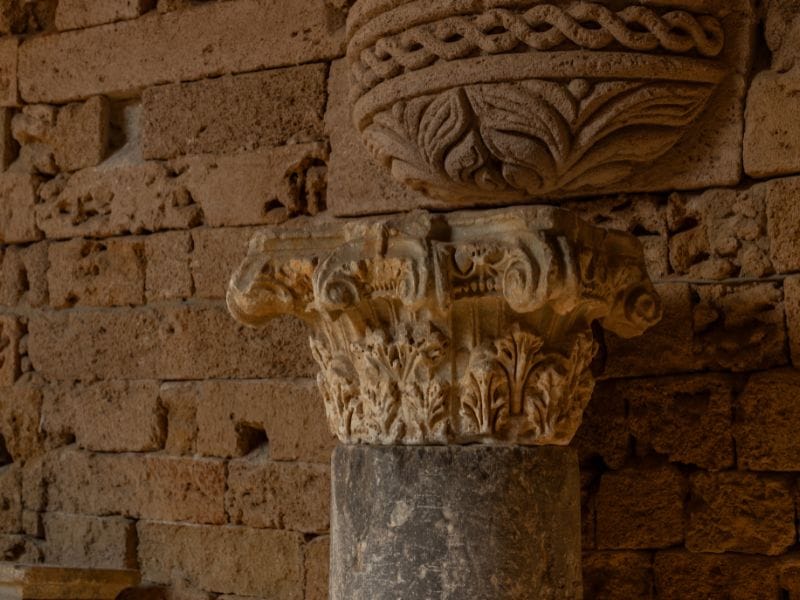
In antiquity, carving words into stone was more than documentation—it was a declaration of permanence. The ancient inscriptions of Rhodes ensured that names and deeds would endure storms, conquest, and the passing of centuries. These texts were public and performative: read aloud, honored during ceremonies, or quietly acknowledged by passersby. Unlike scrolls or books, they were designed to survive—embedded in the cityscape, in sanctuaries, or in sacred ground.
Fragmentary Temples and Their Echoes
Several inscriptions once adorned temples and sanctuaries that have long since disappeared. What remains are sculpted blocks, engraved dedications, and occasional fragments of architectural design. Sometimes, a single line—“To Athena Lindia”—is all that links a stone to a vanished sacred space.
These relics serve as the museum’s only link to once-vital sites of worship, and they remind us how much of the Rhodian religious landscape has been lost to time, yet partially preserved through words.
Museum Display and Interpretation

The garden’s layout allows these ancient inscriptions of Rhodes to breathe in natural light, just as many did in antiquity. Rather than being confined behind glass, they rest under the open sky, side by side with medieval gravestones and knightly artifacts.
This deliberate arrangement creates a dialogue between Rhodes’ pagan, Christian, and chivalric pasts. Interpretive panels help modern readers decode the ancient Greek text, guiding their understanding of both language and context. The result is not a static exhibit—but a layered experience of reading history in its rawest form.
Where Time Leaves a Trace
The ancient inscriptions of Rhodes are more than relics—they are survivors. In this garden of stone, the past does not whisper—it speaks plainly. Every name, every decree, every invocation has outlived its speaker, and yet still fulfills its purpose. Here, Rhodes does not tell its story through kings or battles, but through engraved lines and silent slabs. And in the spaces between the letters, the memory of a civilization endures.